Why You Shouldn’t Aim Your Bat When Swinging ⚾️
In baseball and softball, a successful swing isn’t about aiming—it’s about reaction, mechanics, and trust in your training. Many hitters make the mistake of trying to guide the bat toward the ball, but this actually slows reaction time and disrupts the natural flow of a powerful swing. Instead, a good hitter focuses on timing, proper mechanics, and hand-eye coordination. 👀💪
Here’s Why You Shouldn’t Aim Your Bat:
1. 🚀 Slower Swing Speed – Aiming forces you to guide the bat rather than swinging fluidly, which reduces power and bat speed.
2. ⚙️ Loss of Natural Mechanics – A proper swing should be short, compact, and explosive, allowing for adjustability rather than a pre-planned aim.
3. ⏳ Late Adjustments are Crucial – Pitchers change speeds and locations, so instead of aiming, hitters must rely on reacting to the pitch and making quick adjustments.
4. 👀 Focus on the Ball, Not the Bat – The eyes track the ball, and the body naturally follows through with proper mechanics to make solid contact.
5. 🔥 Maximizing Power and Control – A proper swing generates power through the hips, core, and hands, which can’t happen effectively if you’re trying to aim instead of swinging aggressively through the ball.
What to Do Instead:
✅ Track the ball early out of the pitcher’s hand. 👁️ ✅ Trust your mechanics and take a natural, aggressive swing. 💥 ✅ React to the pitch location rather than pre-determining where you want to hit it. 🎯 ✅ Let the ball travel and focus on making solid contact rather than steering the bat.
The best hitters trust their training, react to the ball, and swing with intent—not hesitation! 🏆
Keep Your Eyes on the Contact Point 👀
One common mistake hitters make is following the ball with their eyes after contact. Keeping the head still is essential for maintaining proper hitting mechanics.
Here’s why:
1. ⚖️ Head Stability for Balance & Power – When a hitter follows the ball with their eyes after contact, their head moves, causing their body to shift or lose balance. Keeping the head still helps maintain a strong, balanced swing.
2. 🛤️ Proper Bat Path & Extension – If the eyes track the ball after contact, the shoulders can pull out, leading to an early rollover or weak contact. Keeping the head down allows the hitter to extend through the ball and drive it with more power.
3. 🎯 Focus on Contact Point – Good hitters train their eyes to track the ball to the contact point rather than looking up too early. Looking up too soon can lead to mis-hits or popping up the ball.
4. 🔍 Head Movement Affects Vision – The more the head moves, the harder it is to track the ball effectively. A steady head helps keep the swing compact and efficient.
A great way to reinforce this is to tell hitters to "See the blur" or "Keep your nose on the ball" through contact before naturally finishing the swing. Drills like slow-motion swings, tee work, and soft toss can help build this habit. 🏋️♂️
Why Keeping Your Hands Above the Ball Matters ✋⚾
Another key component of a successful swing is keeping your hands above the ball. This helps with barrel control, bat path efficiency, and consistent contact.
Here’s why:
1. 📏 Promotes a Level or Slightly Downward Bat Path
o Prevents an exaggerated uppercut, which can lead to pop-ups or weak contact.
o Encourages a compact, direct swing path to maximize solid contact.
2. 🎯 Increases Backspin for Line Drives
o Staying above the ball helps create backspin, allowing the ball to carry farther.
o Ideal for driving balls into gaps rather than hitting weak grounders or easy flyouts.
3. ⚡ Maintains Strong Plate Coverage
o Proper hand position allows hitters to handle different pitch locations more effectively.
o Staying above the ball helps cover the entire strike zone, especially when dealing with fast pitches or breaking balls.
4. 🔥 Generates More Power and Control
o A shorter, more direct swing path means the bat gets to the ball quicker, allowing hitters to react to off-speed pitches.
o This also helps keep the bat head in the hitting zone longer, increasing the chances of making solid contact.
5. 🛑 Prevents Rolling Over Too Early
o If your hands drop too soon, the barrel can dip, causing weak grounders or lazy fly balls.
o Keeping the hands above the ball ensures you stay through the zone and drive the ball effectively.
6. 🚀 Enhances Bat Speed and Quickness
o A short, compact swing with hands above the ball allows for a quicker and more explosive bat path.
o Crucial for reacting to high-velocity pitching. 🎯
By focusing on proper swing mechanics rather than aiming, hitters can maximize their power, consistency, and ability to adjust to different pitches. Train your swing to be natural, aggressive, and fundamentally sound—because the best hitters react, not aim! ⚾🔥
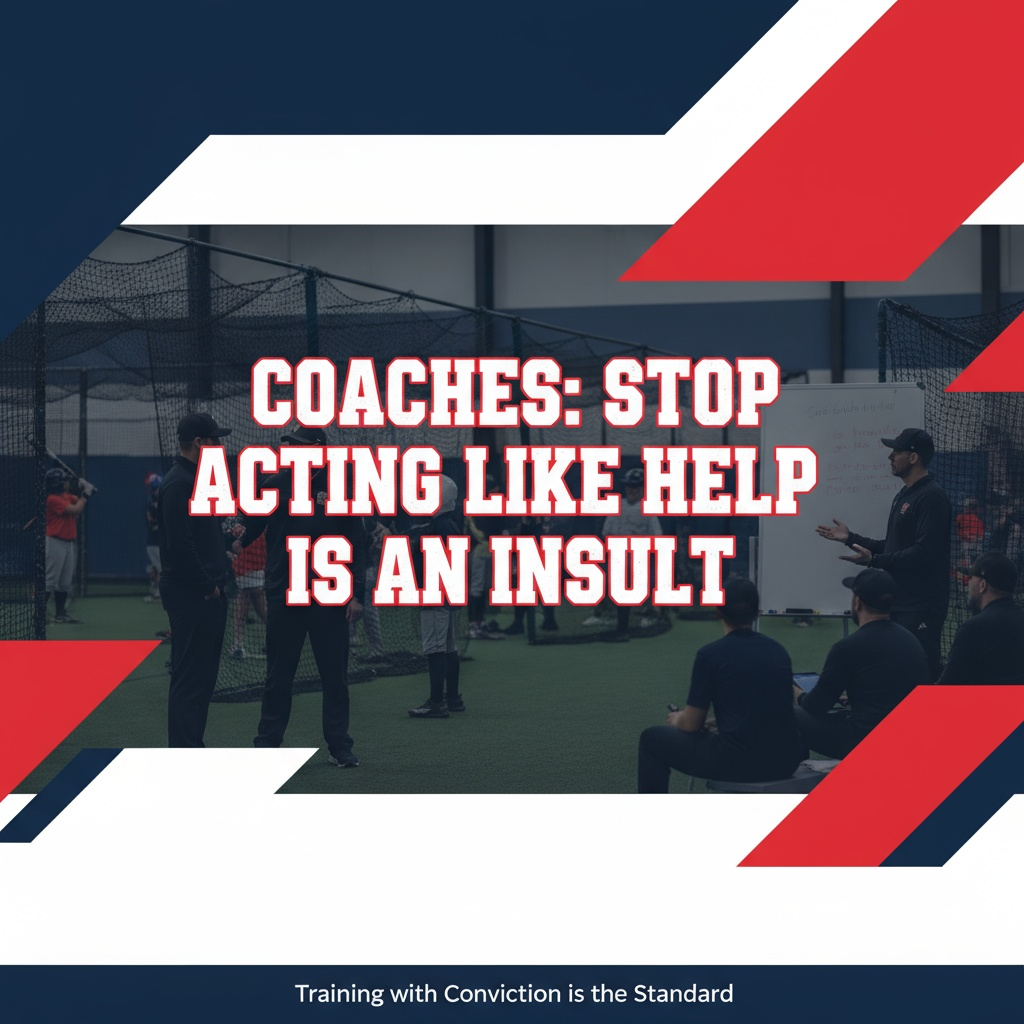
Picture this: A youth travel ball team rents time at a training facility. During practice, the facility owner—someone who's spent years developing athletes—notices something. A mechanical flaw. A safety concern. An opportunity for improvement. They offer a quick tip or suggestion. And the coach? They shut down. Cold shoulder. Defensive body language. Sometimes they'll hit you with the classics: "My team is the best." Or "I've been coaching this team for two years." Or the real gem: "My kid already sees a different instructor." The unspoken message rings loud and clear: Mind your business. Here's what that coach doesn't realize: they just taught their athletes a lesson. And it wasn't about baseball or softball. You're Not Being Charged for the Help When a facility owner shares coaching insight during your rental, they're not adding it to your bill. They're not trying to embarrass you. They're not implying you're incompetent. And they're definitely not trying to sell you their services. These facility owners work with athletes every single day. They see what works and what doesn't across dozens of teams, hundreds of players, and countless skill levels. When they share an observation, it's not about ego or control. It's about seeing an opportunity to help a kid improve—and taking it. That's free expertise. Free mentorship. Free insight that most people would pay good money for. Why would anyone be offended by that? "My Kid Already Sees a Different Instructor" When a facility owner offers a quick tip and you respond with "my kid already has an instructor," what you're really saying is: I think you're trying to steal my business or my athlete. But here's the reality: Nobody is trying to sell you anything. A facility owner pointing out a mechanical adjustment isn't a sales pitch. It's a professional seeing an opportunity to help and doing what professionals do—sharing knowledge. And here's another truth: even if your kid does work with a different instructor, that doesn't mean they can't benefit from additional perspective. The best athletes in the world have multiple coaches, trainers, and mentors. Your kid working with one instructor doesn't mean they've learned everything there is to know. Treating a helpful tip like a sales pitch says more about your insecurity than the facility owner's intentions. What Happens When These Kids Hit Middle School and High School Here's the reality check that every youth travel ball coach needs to hear: Your two years of coaching doesn't prepare these kids for what's coming. When your players get to middle school and high school, everything changes: They'll have multiple coaches with different philosophies. If you've taught them that there's only one right way—your way—they're going to struggle to adapt. They'll face coaches who won't coddle their ego. High school coaches don't care that your travel ball team went 25-5 last summer. They care about results, coachability, and work ethic. Kids who've been shielded from outside input will crumble under real coaching pressure. They'll compete against kids who've learned from multiple sources. While your players were being taught that accepting help from others is disloyal, their competition was absorbing knowledge from every coach, trainer, and mentor they could find. They'll need to be coachable—or they'll ride the bench. High school coaches cut players who can't take feedback. They bench athletes who get defensive when corrected. If you've modeled that behavior for two years, you've set these kids up to fail when it matters most. The talent pool gets deeper and the margin for error shrinks. That kid who dominated 12U travel ball? He's now competing against 50 other kids for 15 roster spots. The players who make it aren't always the most talented—they're the most coachable, the most adaptable, the ones who've learned from everyone around them. College scouts are watching more than skills. They're evaluating attitude, coachability, and character. A player who's been taught to dismiss coaching input sends up massive red flags. Youth travel ball is supposed to prepare kids for the next level. But when you reject collaboration and model ego-driven behavior, you're creating athletes who can't adapt to different coaching styles, get defensive when corrected, and miss development opportunities because they're too proud to accept help. And here's the brutal truth: when these kids get cut from their middle school or high school team, or when they ride the bench because they can't be coached, that's on you. Is There Really a Place for Ego in Baseball or Softball? No. There isn't. Baseball and softball are games of constant adjustment, failure, and learning. Even the best hitters fail seven out of ten times. The game humbles everyone eventually. When you reject help because you're worried about looking like you don't know something, you're bringing ego into a sport that doesn't have room for it. When you dismiss expertise because you feel threatened, you're prioritizing your feelings over your athletes' development. Ego has no place in youth sports. Period. The coaches whose players thrive at the next level? They're the ones who check their ego at the door, stay curious, remain coachable themselves, and teach their athletes to do the same. Your Athletes Are Watching Your players see everything. They watch how you handle feedback. They notice when you get defensive. They hear you dismiss expertise. When you reject help from a facility owner, here's what you're actually teaching them: Ego matters more than growth - Looking like you know everything is more important than learning something new There's only one right way—your way - This kills creativity and creates athletes who can't adapt when they hit high school Accepting help makes you weak - But high school coaches reward coachability with playing time Confidence means never admitting you don't know something - Real confidence says, "That's interesting—tell me more" Every piece of advice is a sales pitch - This cynicism will cost them opportunities at every level You think you're protecting your authority. What you're actually doing is capping your athletes' potential and setting them up to struggle when the competition gets real. We're Supposed to Be on the Same Side Facility owners aren't your competition. They're not trying to steal your team or prove they're better coaches than you. Both of you want the exact same thing—better athletes who reach their full potential and succeed at the next level. These facility owners have seen what happens to kids who make it to the next level—and what happens to those who don't. They know what high school coaches are looking for. They understand what separates the players who thrive from those who flame out. Treating their input like a sales pitch or an attack says more about your insecurity than their intentions. What Ego Actually Costs You When coaches choose ego over collaboration, everybody loses: Your athletes miss out on coaching perspectives that could prepare them for multiple coaching styles at the next level You miss out on becoming a better coach—one whose players actually succeed beyond travel ball Your players struggle at the next level because they've been taught that there's only one way to do things That's a steep price to pay just to protect your ego. Try This Next Time The next time a facility owner offers input during your practice: Actually listen instead of getting defensive Don't assume it's a sales pitch—it's someone trying to help Say thank you—even if you choose not to use the advice Show your athletes what collaborative learning looks like—they'll need that skill at the next level Remember that accepting help makes you stronger, not weaker Think about what happens when these kids face high school coaches—are you preparing them or handicapping them? The best coaches don't need to be the smartest person in every room. They just need to be smart enough to learn from everyone in it. And they need to check their ego at the door—because there's no place for it in baseball or softball, especially when you're preparing kids for the next level. Bottom Line Facility owners who share their expertise during your rental aren't trying to show you up or sell you their services. They're doing what passionate professionals do—helping athletes succeed whenever they see an opportunity and preparing them for what's coming at the next level. If that bothers you, the problem isn't them. It's you. And when your players struggle to make their middle school or high school team because they can't handle coaching from multiple sources, can't adapt to different philosophies, and get defensive when corrected? That's on you too. Your move, coach. Training with Conviction is the Standard. At Progressive Dynamix, we believe every athlete deserves access to every bit of expertise available. We're not here to replace coaches—we're here to support them, collaborate with them, and help every young athlete reach their full potential. When we offer a helpful tip, we're not trying to sell you anything. We're just trying to help kids get better and prepare them for success at the next level.

From travel fields to school pride: shaping athletes for college and beyond.
